
The 6th Summer School on Geosites and Education for Sustainability, entitled “Geo-routes in the Footsteps of the Deinotherium of Sitia”, was successfully held from 3 to 8 July 2026 in Karidi, Sitia, and at the geosites of the UNESCO Global Geopark of Sitia.
The Summer School was organised by the Municipality of Sitia through the UNESCO Global Geopark of Sitia, in cooperation with the Educational Teams of the Environmental Education Centres (K.E.P.E.A.) of Crete, with co-funding from the European project Regions4Climate, implemented under the European Union’s Horizon Europe programme.
For the sixth consecutive year, the UNESCO Global Geopark of Sitia welcomed teachers, university professors, researchers and scientists from across Greece, once again confirming its role as a centre for education, scientific collaboration and sustainable development.
This year’s Summer School was dedicated to Palaeontology, highlighting the importance of fossils and geoheritage as valuable resources for scientific learning, environmental awareness and education for sustainable development.
Over the course of six days, participants attended lectures delivered by distinguished academics, researchers and educators, while also taking part in field activities, hands-on workshops and practical training sessions. The programme included fossil-based palaeoenvironment reconstruction, educational activities on palaeontology, fossil preparation and conservation workshops, field visits to important geosites of the Geopark and innovative educational approaches linking geodiversity, climate change and natural heritage.
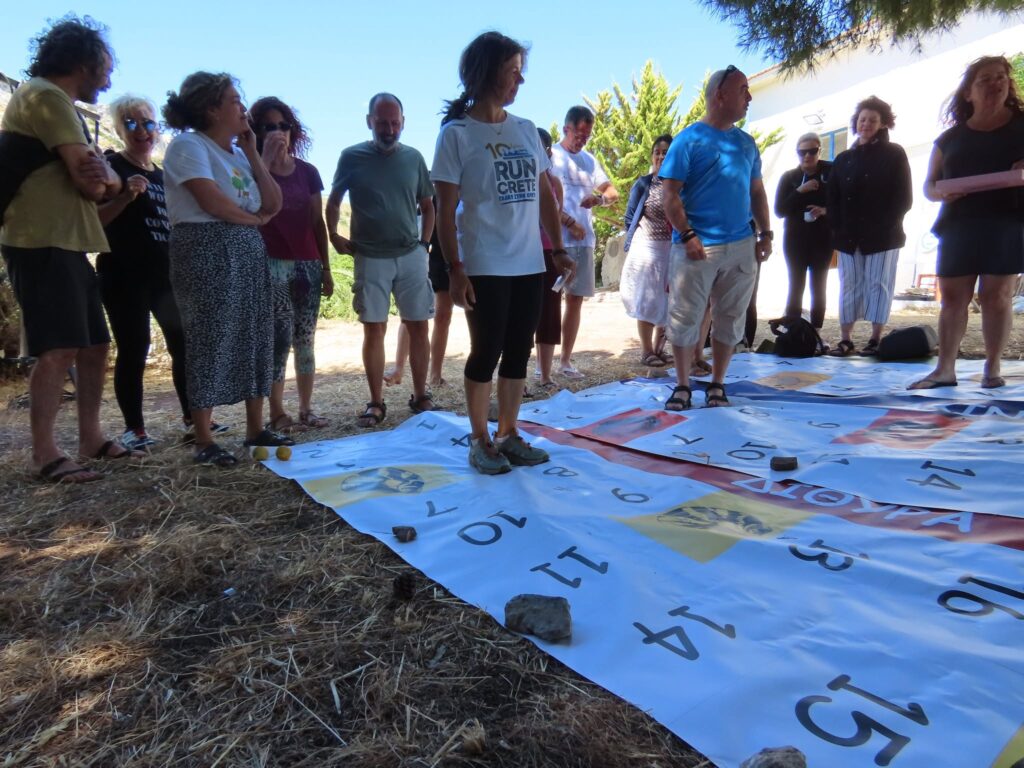
A highlight of the programme was the public scientific conference entitled “Traces of the Past in the Sitia Geopark as a Tool for Education and Tourism for the Future”, which explored the contribution of UNESCO Global Geoparks to education, geotourism, local development and the protection of geological heritage.
The Summer School was implemented as part of the Regions4Climate (R4C) project, through which the Municipality of Sitia is developing innovative initiatives that strengthen climate resilience by promoting education, public participation and the sustainable management of geoheritage.
Once again, the 6th Summer School demonstrated that the UNESCO Global Geopark of Sitia is a dynamic centre for learning, research and innovation, making a meaningful contribution to the promotion of geoeducation, climate resilience and the protection of our natural heritage.